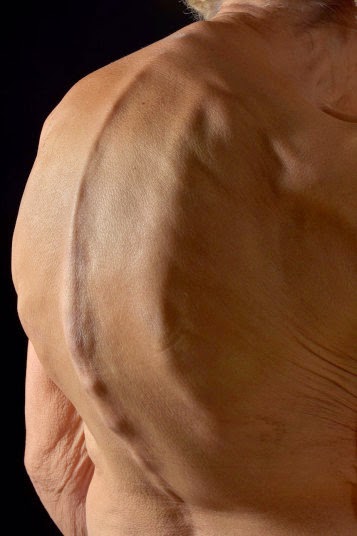
"Portrait of a Young Jew" (circa 1648)
_________________________________________________________________________________________________________________________________________________ "It is not in the heavens, that you should say, "Who among us can go up to the heavens and get it for us and impart it to us, that we may observe it?" (...) No, the thing is very close to you, in your mouth and in your heart, to observe it". Deuteronomy
19 de março de 2015
18 de março de 2015
17 de março de 2015
Moses heard the people weeping, every clan apart, each person at the entrance of his tent. The LORD was very angry, and Moses was distressed. And Moses said to the LORD, "Why have You dealt ill with Your servant, and why have I not enjoyed Your favor, that You have laid the burden of all this people upon me? Did I conceive all this people, did I bear them, that You should say to me, 'Carry them in your bosom as a nurse carries an infant,' to the land that You have promised on oath to their fathers? Where am I to get meat to give to all this people, when they whine before me and say, 'Give us meat to eat!' I cannot carry all this people by myself, for it is too much for me. If You would deal thus with me, kill me rather, I beg You, and let me see no more of my wretchedness!
Numbers 11, 10-15
JPS
16 de março de 2015
15 de março de 2015
14 de março de 2015
13 de março de 2015
Teologia
Theology is a sacred enterprise, to be enacted with awe and probity; for it is the ever-new attempt to speak of the reality of God and direct the self toward this truth. So considered, theology is a spiritual exercise of the highest order. Its work is conditioned by time and place and tradition, and by the differential impact of these factors. Whether theology strives for eternal and abstract formulations - or for expressions that are more temporal and concrete - depends on the particular practitioner of these thought-forms as well as diverse cultural factors. Styles of theological practice vary greatly. Some center on brief images, born in intuitive flashes and connected by a spiritual logic; others derive from more discursive acts of reason, and adhere to more formal standards of coherence. In addition, these different versions may evoke authoritative sources in explicit or covert ways - or not all. The phenomenon of theology is thus multiple in nature and protean in form. Each generation produces the expressions appropriate to its conventions and needs. The impact of life and the search for meaning and integrity crowd one's consciousness continuously. A living theology tries to meet this challenge again and again.
Thus, despite the natural desire for enduring explanations, new times will repeatedly impeach inherited consolidations and induce their constant reformulation. Disingenuousness or fear may seduce one into self-deception and disregard; but authenticity is their moral counterforce, and demands repeated stocktaking and reassessment. It requires one to step out of the shadows of tradition and routine and say: "Here I am; this is life as I know it." Such a confession clears a space for honest theology. Too often is our sense of the world affected by habit and familiar ideas. We have eyes to see, but our minds are filled with idols. The result is a living death. Almost unknowingly we become caretakers of our moribund sensibilities. Only through self-examination may one hope to begin anew.
Michael Fishbane, "Sacred Attunement"
12 de março de 2015
11 de março de 2015
10 de março de 2015
8 de março de 2015
7 de março de 2015
6 de março de 2015
Morte
A terminally ill woman
looks at a self-portrait of Rembrandt at the Rijksmuseum.
Dutch charity Ambulance Wens granted the dying woman’s last wish for a private viewing of the Rembrandt exhibition.
5 de março de 2015
3 de março de 2015
"HaTikvah"
| כֹּל עוֹד בַּלֵּבָב פְּנִימָה | As long as in the heart, within, | ||||||||||||||||||||||||||||||||
| נֶפֶשׁ יְהוּדִי הוֹמִיָּה | A Jewish soul still yearns, | ||||||||||||||||||||||||||||||||
| וּלְפַאֲתֵי מִזְרָח, קָדִימָה, | And onward, towards the ends of the east, | ||||||||||||||||||||||||||||||||
| עַיִן לְצִיּוֹן צוֹפִיָּה, | an eye still gazes toward Zion; | ||||||||||||||||||||||||||||||||
| עוֹד לֹא אָבְדָה תִּקְוָתֵנוּ, | Our hope is not yet lost, | ||||||||||||||||||||||||||||||||
| הַתִּקְוָה בַּת שְׁנוֹת אַלְפַּיִם | The hope of two thousand years, | ||||||||||||||||||||||||||||||||
| לִהְיוֹת עַם חָפְשִׁי בְּאַרְצֵנוּ, | To be a free nation in our land, | ||||||||||||||||||||||||||||||||
| אֶרֶץ צִיּוֹן וִירוּשָׁלַיִם. | The land of Zion and Jerusalem. |
2 de março de 2015
Ucrânia
Donetsk, Ukraine
An elderly woman walks across a bridge, destroyed by recent heavy fighting between government forces and Russian-backed separatists.
1 de março de 2015
Báltico
"Lithuania has a long history of conflict with
its Russian neighbor. The Museum of Genocide Victims in Vilnius, which
until 2011 did not even mention the more than 200,000 Lithuanian Jews
who died in the Nazi Holocaust, was established in 1992 to memorialize
Lithuanians killed by the Nazi, but mostly Soviet, occupiers.
Lithuania is also one of the few countries
where neo-Nazis are free to brandish swastikas on the street. Its
northern neighbor, Latvia, is the only European country where veterans
of the Waffen SS are allowed each year to march on main streets and
commemorate their comrades, who are venerated as freedom fighters
against Russia.
Since 2008, Latvia and Lithuania have played
host to three neo-Nazi marches annually. A fourth event began last year
in the third Baltic nation, Estonia.
The Baltic nations, which have clashed
frequently with Slavic peoples, share bitter memories from Soviet
domination that have made them natural allies of Germany, according to
Efraim Zuroff, a Nazi hunter and director of the Simon Wiesenthal
Center’s Israel office. The historic conflict led thousands of
Lithuanians and Latvians to volunteer for armed Nazi groups. “Now, Russian expansionism under Vladimir Putin is serving as the
perfect pretext to push forward a false historical account that accuses
the Russians of genocide, and at the same time conveniently portrays the
local Baltic populations as victims instead of perpetrators (...)".
Tirado daqui.
Tirado daqui.
Subscrever:
Mensagens (Atom)


%2B-%2BThe%2BCry%2C%2B1960.jpg)

%2B.jpg)


%2C%2Badults%2Band%2Ba%2Bbaby%2C%2Bin%2BHubei%2Bprovince%2C%2BChina.jpeg)


%2C%2B2010.jpeg)